
Opening Ceremony lays the foundation for cross-sector collaboration and breakthrough solutions.


10-14 JANUARY 2027 Abu Dhabi, UAE
EN
The Zayed Sustainability Prize Awards Ceremony celebrates 11 winners driving real-world impact across the categories of Health, Food, Energy, Water, Climate Action and Global High Schools.
The ADSW Summit sparks dynamic, inclusive discussions that drive the global sustainability agenda forward.
This Global South–focused gathering will convene policymakers, developers, financiers, and off-takers from the Global South and the UAE.
Convening investors, developers, and operators to build bankable project pipelines and scale blended finance for sustainable water management.
Read the latest thoughts and analysis on breakthrough solutions driving impact for a sustainable future
Explore reports and strategic insights from ADSW
Hear influential voices discuss global challenges and the solutions for a sustainable future
Line of Sight Podcast brought to you by ADSW
Subscribe to get the latest news, events and announcements
Open to all, the competition will accept submissions until November 16, 2026.
Get insights from crucial conversations throughout the global sustainability calendar
Watch virtual conversations with thought leaders and experts around the world
Find out why we convene the global sustainability community each year
See the sustainability experts helping guide ADSW's strategy
Read our story
Be part of a leading global sustainability platform
See the leaders from across sectors and around the world who have joined ADSW
A global leader in sustainability, Masdar has hosted ADSW since 2008

5 Ways Supply-Chain Circularity Is Making Countries More Climate-Resilient

Climate resilience is usually cast as a response to extreme weather, but the real stress test is playing out inside the supply chains that underpin modern life. Recent climate shocks show not that our current systems are breaking down, but that they have been built without the capacity to adapt.
Circular supply chains rethink this rigidity. By treating materials as long-term assets that move across industries rather than single-use commodities, they challenge the old linear model of taking, making, and discarding. That model once served global trade, but today it leaves nations exposed to climate disruptions and geopolitical volatility.
Redesigning how countries source, use, and recover materials is becoming a powerful resilience strategy. Instead of constant extraction and long, vulnerable shipping routes, circular supply chains keep resources in circulation through repair, reuse, remanufacturing, and high-quality recycling. This shift, supported by circular design, industrial symbiosis, and smarter waste systems, strengthens economic stability while delivering meaningful climate benefits.
Here are five ways circular supply chains are already helping countries weather a rapidly changing world.
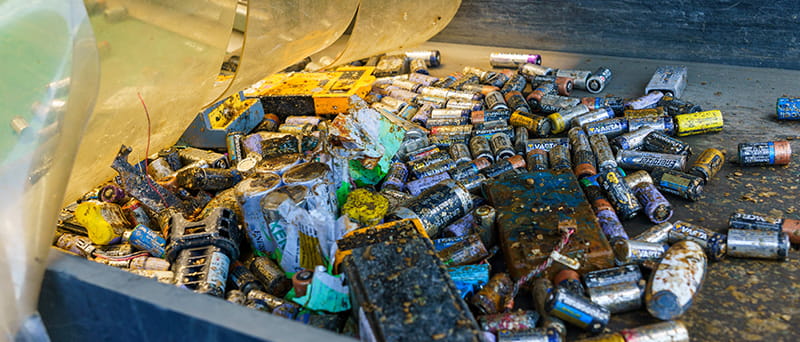
A battery recycling facility
1. Less dependence on fragile global supply chains
Climate challenges often hit countries through their supply chains. Drought can disrupt grain exports, extreme heat can shut down mining, and storms can halt shipping for weeks. Circularity reduces the need for virgin materials altogether. The Ellen MacArthur Foundation shows that extending product lifespans and using recycled inputs significantly cuts demand, and therefore exposure, to climate-driven disruptions. Countries like the UAE are making recycling plants for metals, polymers, and batteries central to the localized, circular material flows within new industrial zones, effectively reducing their dependence on distant suppliers facing growing climate uncertainty.
2. Lower emissions, lower future climate risk
The way we make things is a major driver of warming, but circular supply chains help countries tackle climate challenges at their source. About 70% of global greenhouse gas emissions come from material extraction and processing, says the UN Development Programme. By relying more on secondary materials and designing products to last, governments and businesses can reduce emissions dramatically and quickly.

Cutting emissions today also reduces the severity of future climate impacts, meaning fewer extreme events that damage infrastructure, disrupt economies, and cost lives. Governments like the UAE’s that are adopting circular practices are cleaning up supply chains, as well as building a buffer against future climate shocks. The “Circular Dutch economy by 2050” plan aims to cut in half the use of primary resources like minerals, metals, and fossil-carbon resources by 2030 by designing for reuse, repair, refurbishment, and recycling, a key strategy if countries want to complete the picture of climate mitigation and build more resilient societies.
3. More flexible and adaptable production systems
Traditional supply chains tend to prioritize cost and efficiency, leaving little room for flexibility. But resilience depends on having multiple options when something goes wrong, options that circular supply chains create. A growing body of research shows that when companies exchange materials, reuse by-products, and build localized production loops, the system becomes less brittle and more responsive in a crisis.
Cross-industry partnerships like the Linhai Industrial Park in Taiwan keep materials flowing during disruptions. Rather than relying on a single vulnerable supply line, companies operate within a resilient network of resource sharing.
4. Better data, better decisions
One of the newest developments in circularity is the rise of digital product passports (DPPs) that track a product’s materials, origins, and repairability over its life. In addition to closing the gap between consumer demands for transparency and the current lack of reliable product data, tools like this are increasingly seen as key to scaling circularity and essential for resilience.
Bolstered in the EU by a new regulatory framework, DPPs allow businesses to quickly identify substitute materials or alternative suppliers, critical during a crisis. When companies and governments know exactly what materials they have, where they are, and how they can be reused, they can respond much more effectively when supply chains are stressed. That means fewer bottlenecks, less waste, and a faster return to normal after climate-related disruptions.
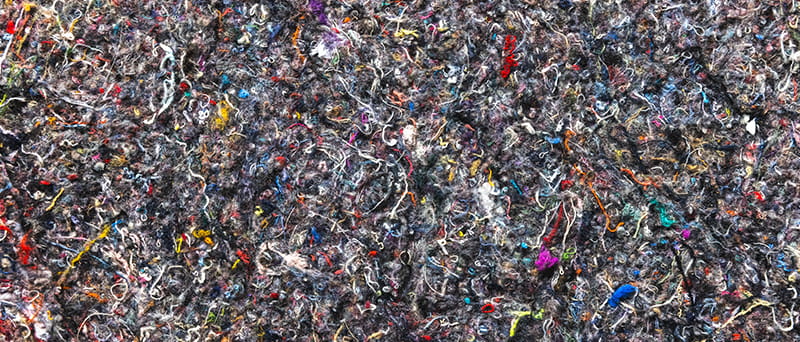
Recyled textile insulation fabric
5. Stronger local economies and more resilient communities
Climate resilience is as much about people as it is about infrastructure. Circular supply chains create jobs in repair, refurbishment, recycling, remanufacturing, and new circular services. The International Institute for Sustainable Development has shown that transitioning to a circular economy generates more jobs than it replaces, especially in emerging markets where local labor and skills can be leveraged. And, when goods are repaired instead of replaced, materials circulate in local markets, and recycling industries grow, communities become less vulnerable to global supply shocks.
In Chile, the government has expanded its Extended Producer Responsibility law to cover textiles, requiring importers to report volumes and paving the way for future rules on repair, reuse, and recycling. This shift supports the development of local circular industries, helping reduce waste, such as the huge textile dumps in the Atacama Desert, and making communities less reliant on distant markets for materials processing.
A new foundation for resilience
Circular supply chains don’t claim to eliminate climate risk, but they make countries less exposed, more adaptable, and better positioned to handle disruptions, whether environmental or economic. Increasingly recognized as a foundation of national climate resilience, circularity is no longer a niche sustainability idea. And in a world where climate uncertainty is the new normal, the practical nature of circularity makes it one of the most hopeful tools we have for a resilient future.
Circular supply chains rethink this rigidity. By treating materials as long-term assets that move across industries rather than single-use commodities, they challenge the old linear model of taking, making, and discarding. That model once served global trade, but today it leaves nations exposed to climate disruptions and geopolitical volatility.
Redesigning how countries source, use, and recover materials is becoming a powerful resilience strategy. Instead of constant extraction and long, vulnerable shipping routes, circular supply chains keep resources in circulation through repair, reuse, remanufacturing, and high-quality recycling. This shift, supported by circular design, industrial symbiosis, and smarter waste systems, strengthens economic stability while delivering meaningful climate benefits.
Here are five ways circular supply chains are already helping countries weather a rapidly changing world.
A battery recycling facility
1. Less dependence on fragile global supply chains
Climate challenges often hit countries through their supply chains. Drought can disrupt grain exports, extreme heat can shut down mining, and storms can halt shipping for weeks. Circularity reduces the need for virgin materials altogether. The Ellen MacArthur Foundation shows that extending product lifespans and using recycled inputs significantly cuts demand, and therefore exposure, to climate-driven disruptions. Countries like the UAE are making recycling plants for metals, polymers, and batteries central to the localized, circular material flows within new industrial zones, effectively reducing their dependence on distant suppliers facing growing climate uncertainty.
2. Lower emissions, lower future climate risk
The way we make things is a major driver of warming, but circular supply chains help countries tackle climate challenges at their source. About 70% of global greenhouse gas emissions come from material extraction and processing, says the UN Development Programme. By relying more on secondary materials and designing products to last, governments and businesses can reduce emissions dramatically and quickly.
Cutting emissions today also reduces the severity of future climate impacts, meaning fewer extreme events that damage infrastructure, disrupt economies, and cost lives. Governments like the UAE’s that are adopting circular practices are cleaning up supply chains, as well as building a buffer against future climate shocks. The “Circular Dutch economy by 2050” plan aims to cut in half the use of primary resources like minerals, metals, and fossil-carbon resources by 2030 by designing for reuse, repair, refurbishment, and recycling, a key strategy if countries want to complete the picture of climate mitigation and build more resilient societies.
3. More flexible and adaptable production systems
Traditional supply chains tend to prioritize cost and efficiency, leaving little room for flexibility. But resilience depends on having multiple options when something goes wrong, options that circular supply chains create. A growing body of research shows that when companies exchange materials, reuse by-products, and build localized production loops, the system becomes less brittle and more responsive in a crisis.
Cross-industry partnerships like the Linhai Industrial Park in Taiwan keep materials flowing during disruptions. Rather than relying on a single vulnerable supply line, companies operate within a resilient network of resource sharing.
4. Better data, better decisions
One of the newest developments in circularity is the rise of digital product passports (DPPs) that track a product’s materials, origins, and repairability over its life. In addition to closing the gap between consumer demands for transparency and the current lack of reliable product data, tools like this are increasingly seen as key to scaling circularity and essential for resilience.
Bolstered in the EU by a new regulatory framework, DPPs allow businesses to quickly identify substitute materials or alternative suppliers, critical during a crisis. When companies and governments know exactly what materials they have, where they are, and how they can be reused, they can respond much more effectively when supply chains are stressed. That means fewer bottlenecks, less waste, and a faster return to normal after climate-related disruptions.
Recyled textile insulation fabric
5. Stronger local economies and more resilient communities
Climate resilience is as much about people as it is about infrastructure. Circular supply chains create jobs in repair, refurbishment, recycling, remanufacturing, and new circular services. The International Institute for Sustainable Development has shown that transitioning to a circular economy generates more jobs than it replaces, especially in emerging markets where local labor and skills can be leveraged. And, when goods are repaired instead of replaced, materials circulate in local markets, and recycling industries grow, communities become less vulnerable to global supply shocks.
In Chile, the government has expanded its Extended Producer Responsibility law to cover textiles, requiring importers to report volumes and paving the way for future rules on repair, reuse, and recycling. This shift supports the development of local circular industries, helping reduce waste, such as the huge textile dumps in the Atacama Desert, and making communities less reliant on distant markets for materials processing.
A new foundation for resilience
Circular supply chains don’t claim to eliminate climate risk, but they make countries less exposed, more adaptable, and better positioned to handle disruptions, whether environmental or economic. Increasingly recognized as a foundation of national climate resilience, circularity is no longer a niche sustainability idea. And in a world where climate uncertainty is the new normal, the practical nature of circularity makes it one of the most hopeful tools we have for a resilient future.
More Articles
22 DECEMBER 2025
Human Development and Prosperity
Three case studies on AI’s growing role in urban planning and mobility
27 NOVEMBER 2025
Future Energy Systems